The site is clearly not designed for tourists who are more likely to be NOT familiar with the geography of another country.
Let's look at the customer journey below:
Customer Journey #1: Search hotel by location
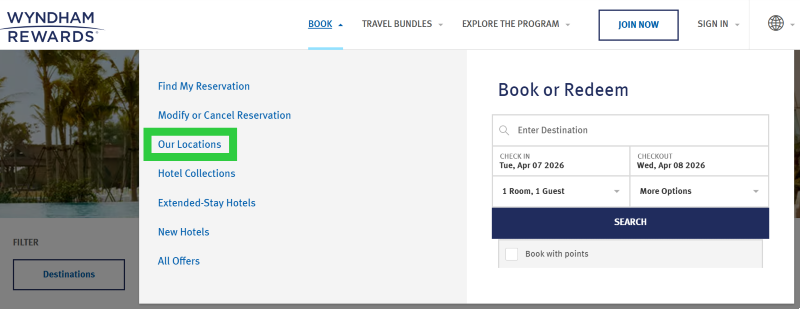
A potential customer hears from their friend that Wyndham hotels are nice. They go to Wyndham's site, and selects Our Locations to see whether there might be a Wyndham hotel they can book on their vacation to Indonesia, a country they have not visited before. So far so good.
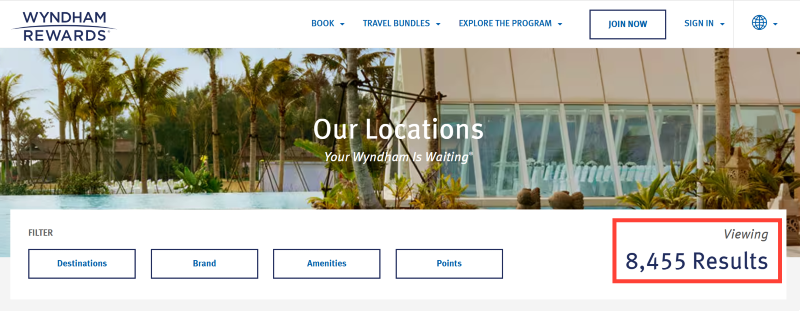
Whoops. The website starts loading 8455 results. Does the Wyndham website owner not wonder why their backend is clobbered each time someone clicks on Our Locations?
For the website visitor, the results will not complete loading in any reasonable time frame, nor should it.
Most website visitors will hopefully ignore this folly and click on Destinations to narrow the results down immediately.
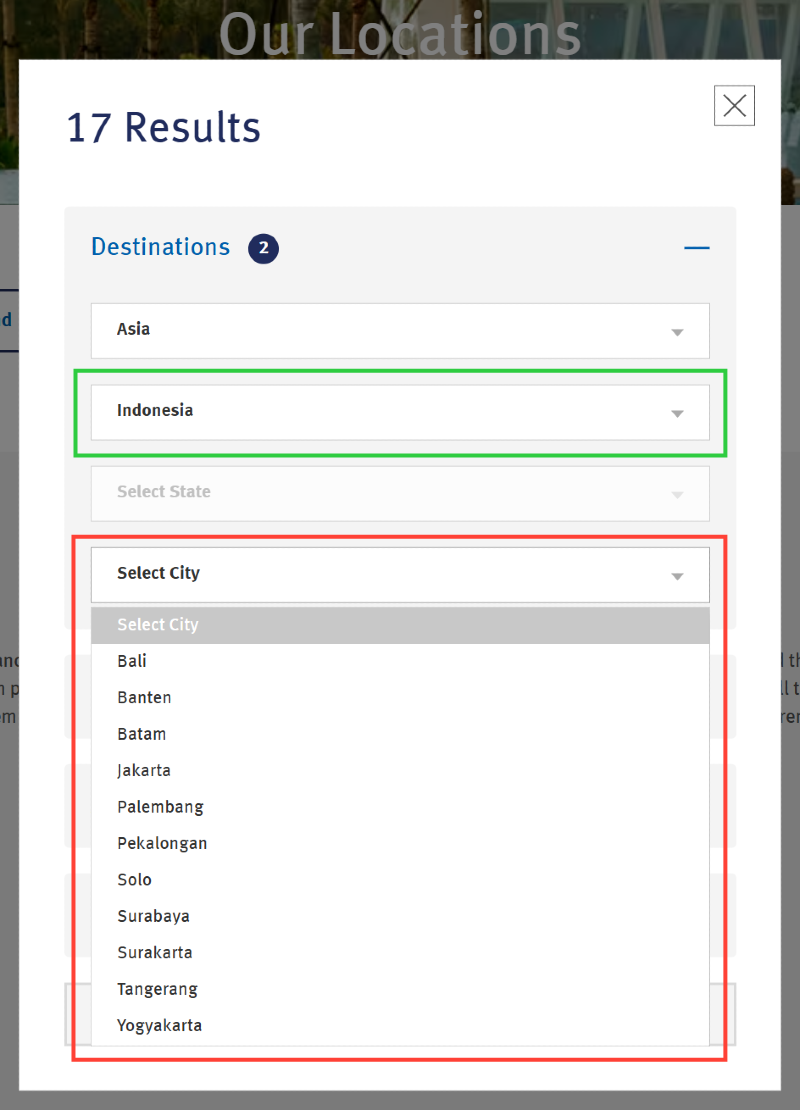
Phew! There is a region and country filter. If you've heard of Indonesia, you're very likely to know it's in Asia.
The next issue is a potential dependency on you knowing which city in Indonesia to go to because there is no map view. Many tourists are most likely to have heard of Jakarta and Bali, but who knows which cities neighbor each other? Do I have to stay in Bali or is it a reasonable drive away from some other city listed there?
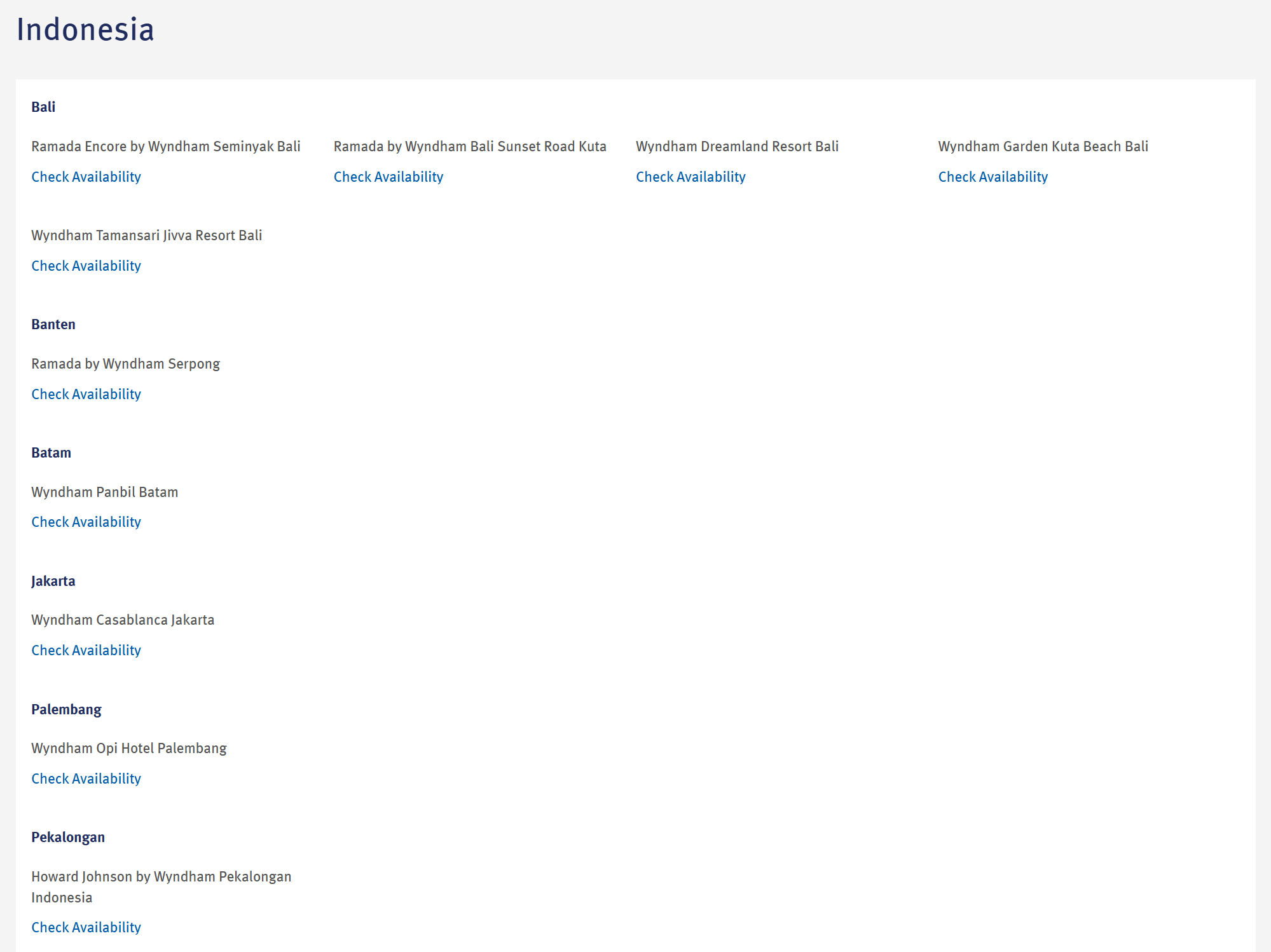
Say you don't pick a city at all. You run into the problem mentioned earlier: no map view! Even if you know you want to only go to Bali, how do you compare which hotel in Bali is at the location you want? e.g. close to airport, beach, friend's house, tourist attraction.
My take
I'm not even going to bother evaluating the Wyndham loyalty program if the website is so unusable. GHA, Hilton, Hyatt and Marriott all have map views.
Discussion